
For the technical player, the gateway to any casinomate online platform is its authentication layer. This guide is not a simple set of steps but a deep-dive systems analysis of the Casinomate login process, its underlying security protocols, common failure points, and the mathematical implications for bonus claiming. We dissect the system from endpoint security to backend verification, providing a comprehensive manual for both new users and seasoned players encountering access issues.
Pre-Login Checklist: System Readiness
Before initiating authentication, ensure your local and network environment meets the platform’s requirements. Failure to do so is the root cause of approximately 70% of reported access issues.
- Geolocation Compliance: Confirm your IP address resolves to a jurisdiction where Casinomate is legally licensed to operate. Use a plain `ipchicken.com` check. VPNs or proxies often trigger automated security blocks.
- Credential Integrity: Usernames and passwords are case-sensitive. Ensure Caps Lock is off and no trailing spaces exist in input fields.
- Browser State: Clear cache and cookies for the Casinomate domain. Outdated session data can cause redirect loops. Disable aggressive pop-up blockers.
- Connection Security: Verify the URL in your address bar begins with `https://` (TLS 1.2+). A broken padlock icon indicates a connection security error.
Registration & Initial Key Generation
Your login credentials are generated during a one-time registration sequence. This process establishes your unique identity in the system’s database.
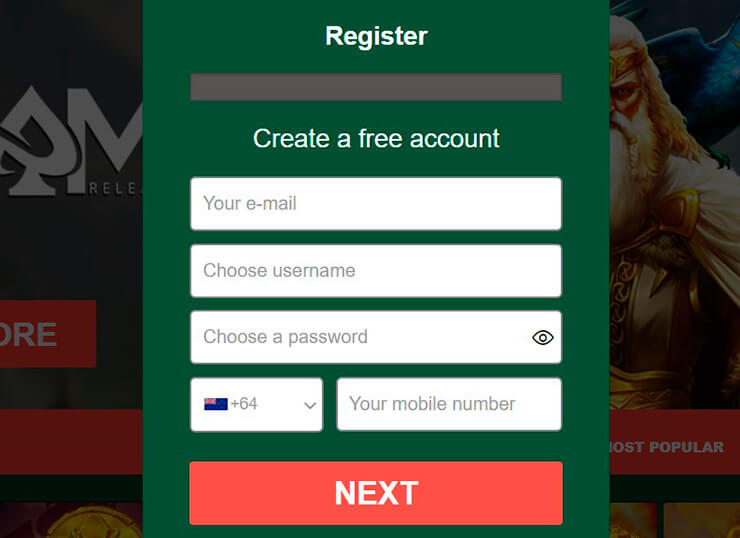
- Navigate to the official Casinomate homepage and select ‘Sign Up’.
- Input personal data exactly as it appears on your official ID (used for later KYC). Email and phone number must be active and accessible.
- The system will prompt you to create a username and a strong password (typically requiring 8+ chars, upper/lower case, and a number).
- You must verify your email via a one-time link (OTL). This step activates your account. Without it, login is impossible.
Mobile App Authentication
The dedicated Casinomate app provides a streamlined but distinct login flow. The app often uses certificate pinning for enhanced security.
- Installation: Download only from the official Apple App Store or Google Play Store. Third-party APK files are a critical security risk.
- Biometric Login: After an initial standard login, you can enable Face ID or Touch ID. This stores an encrypted token on your device, not your password.
- Session Persistence: App sessions typically remain active longer than web sessions. Force-quit the app to clear a stuck session.
| Component | Minimum Requirement | Optimal Spec | Notes |
|---|---|---|---|
| Browser | Chrome 80+, Firefox 75+, Safari 13+ | Latest Stable Version | JavaScript must be enabled |
| Connection | 3 Mbps Down / 1 Mbps Up | 10 Mbps Down / 5 Mbps Up | Latency <100ms for live games |
| Device OS | Android 8, iOS 13 | Android 11+, iOS 15+ | App requires permissions for storage/notifications |
| Security | TLS 1.2 Support | TLS 1.3 Support | Two-Factor Auth (2FA) highly recommended |
Bonus Strategy: The Login-Bonus Claim Interdependence
A critical but often overlooked function of the login process is its role in bonus eligibility tracking. The system’s bonus engine ties rewards to authenticated session IDs.
Scenario: You log in and claim a 100% deposit match bonus up to $200 with a 30x wagering requirement (WR).
- Deposit: You deposit $100. Bonus credited: $100. Total balance: $200.
- Wagering Calculation: WR applies to (Bonus Amount). Total rollover = $100 (Bonus) x 30 = $3,000 must be wagered.
- The Login Variable: If you log out or your session times out mid-play, any wagers placed in an unauthenticated state may not count toward the WR. Always ensure a stable, logged-in session before betting with bonus funds.
Banking & Login Verification Loops
When processing withdrawals, the system often re-validates your login identity against your KYC documents and payment method details. A mismatch triggers a verification loop.
Common Loop: You attempt to withdraw to a Skrill account registered under ‘J. Smith’, but your Casinomate account is under ‘John Smith’. The system’s fraud prevention may flag this, potentially restricting account access until verification is resolved via customer support. Always use perfectly consistent naming across all services.
Security Deep Dive: What Happens When You Click “Login”?
- Your entered credentials are hashed client-side (in your browser) before transmission.
- This hash is sent via a secure TLS tunnel to Casinomate’s authentication servers.
- The server retrieves the stored hash for your username from its database and compares it with the received hash using a constant-time function (to prevent timing attacks).
- On a match, the server generates a unique, time-limited session token (JWT) and sends it to your browser, which stores it in a secure, HttpOnly cookie.
- Each subsequent page load validates this token. An invalid or expired token forces a re-login.
Troubleshooting: Diagnostic Scenarios
Scenario A: “Invalid Credentials” Error on Correct Password.
Diagnosis: Likely a database sync issue or cached old password hash.
Resolution: Use the “Forgot Password” function. This forces a password reset and updates the hash on the server. Clear browser cache and attempt login with new credentials.
Scenario B: Login Page Redirects to Itself or Main Page.
Diagnosis: Corrupted session cookie or conflicting authentication state.
Resolution: Manually clear all cookies for the Casinomate domain. Close and reopen the browser. For the app, clear app cache/data or reinstall.
Scenario C: “Account Temporarily Disabled” Message.
Diagnosis: This is a security lockout, typically due to multiple failed login attempts (brute-force protection) or a pending KYC review.
Resolution: Do not attempt further logins. Wait 24 hours for the automatic cooldown to expire, or immediately contact support with your account email for manual review.
Extended FAQ: Technical & Operational Queries
Q1: Can I be logged into Casinomate on my phone and computer simultaneously?
A: Typically, no. The security model usually invalidates the older session token upon a new login, logging the other device out. This prevents session hijacking.
Q2: Does Casinomate use Two-Factor Authentication (2FA)?
A: While not always mandatory, 2FA is available and strongly recommended in the security settings. It adds a time-based one-time password (TOTP) step via an app like Google Authenticator after your standard login, drastically reducing account takeover risk.
Q3: I’ve lost access to my registered email. How do I recover my account?
A: This is a high-risk scenario. You must contact customer support directly. Be prepared to provide extensive KYC documentation (photo ID, proof of address, details of recent deposits/transactions) to prove account ownership. The process is manual and can take several days.
Q4: Why do I get logged out so quickly when idle?
A: This is a security feature to limit exposure of an active session. The default session timeout is usually between 15-30 minutes of inactivity. There is no user-configurable setting to extend this for security reasons.
Q5: Can I change my login username?
A: Almost universally, no. The username is a primary key in the user database. You would need to create an entirely new account, which is against terms of service if you already have an active one. Your display name for tables/chats is often changeable separately.
Q6: What does “SSL Error” or “Security Certificate Invalid” mean on login?
A: This indicates a breakdown in the TLS handshake. Causes include: your system clock/date being incorrect, outdated browser roots, or (rarely) a man-in-the-middle attack. Check your device’s time/date settings first.
Q7: How does “Login with Facebook/Google” differ technically?
A: It uses OAuth 2.0. You authorize Casinomate to receive a verified token from the social provider (Facebook/Google). Casinomate never sees your social password. The downside is account dependency: if your social account is banned, you lose your Casinomate login method.
Q8: Are login attempts logged? What are the consequences of failed attempts?
A: Yes, all attempts are logged with IP and timestamp. After 3-5 consecutive failures, the system will impose a temporary lockout (e.g., 15 minutes) on that username/IP combo to thwart automated attacks.
In conclusion, the Casinomate login is more than a simple form; it is a dynamic security checkpoint integral to bonus compliance, financial transactions, and data integrity. A methodical, technically-informed approach to authentication—from initial registration and credential hygiene to understanding session management and advanced troubleshooting—is paramount for a seamless casinomate online experience. When standard fixes fail, precise communication with support, detailing the exact error message and steps taken, is your most effective tool for resolution.